Let it run.
Hand your backlog to a crew that specs, codes, reviews, and ships in parallel while you sleep. Wake up to a Done column that moved without you — and one question, if the night got interesting.
Your whole week on one board — and every card is alive.
Projects down the left, a kanban across the middle. But these aren't sticky notes you drag by hand: the card in flight is showing its stage, its progress bar, its branch, and its diff — +268 −4 — while you read it. Nothing on this board is waiting for you to move it.
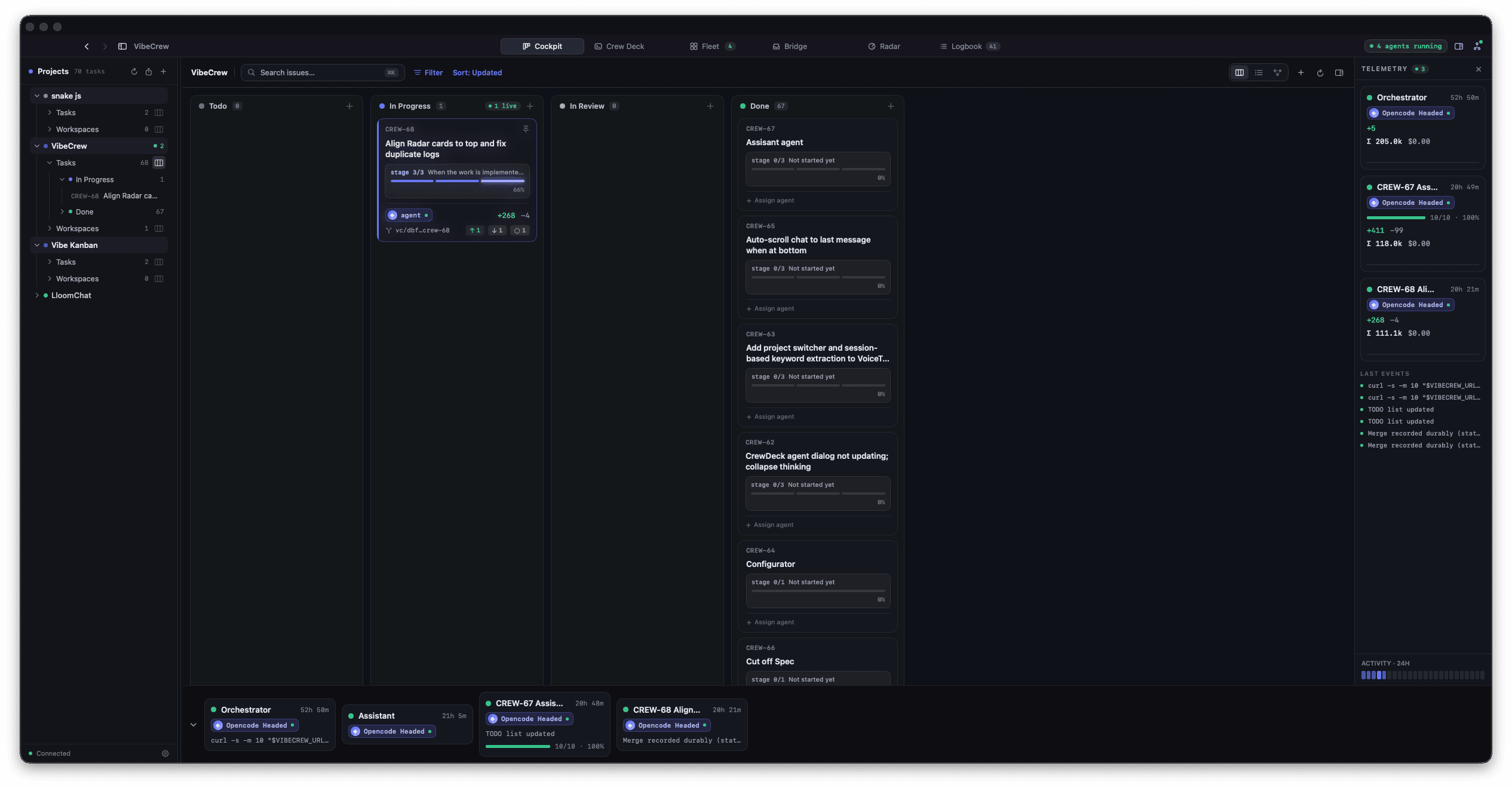
snake js, VibeCrew, Vibe Kanban, LloomChat — every repo you own on a single board, because nobody works in one repo any more.
A card with no agent is one click away from having one. Cards that depend on other cards simply wait their turn.
That green pip is not a status somebody set. It's a process, running, right now, in a worktree on your machine.
Three agents you never have to brief. One you actually talk to.
The Crew Deck is where you stop dispatching. Orchestrator plans and delegates. Assistant explains things and writes config — never code. Auditor checks what a card really shipped against what it claimed. You type one line into the composer; the Orchestrator files a tick report saying exactly what it moved, what it left alone, and why.
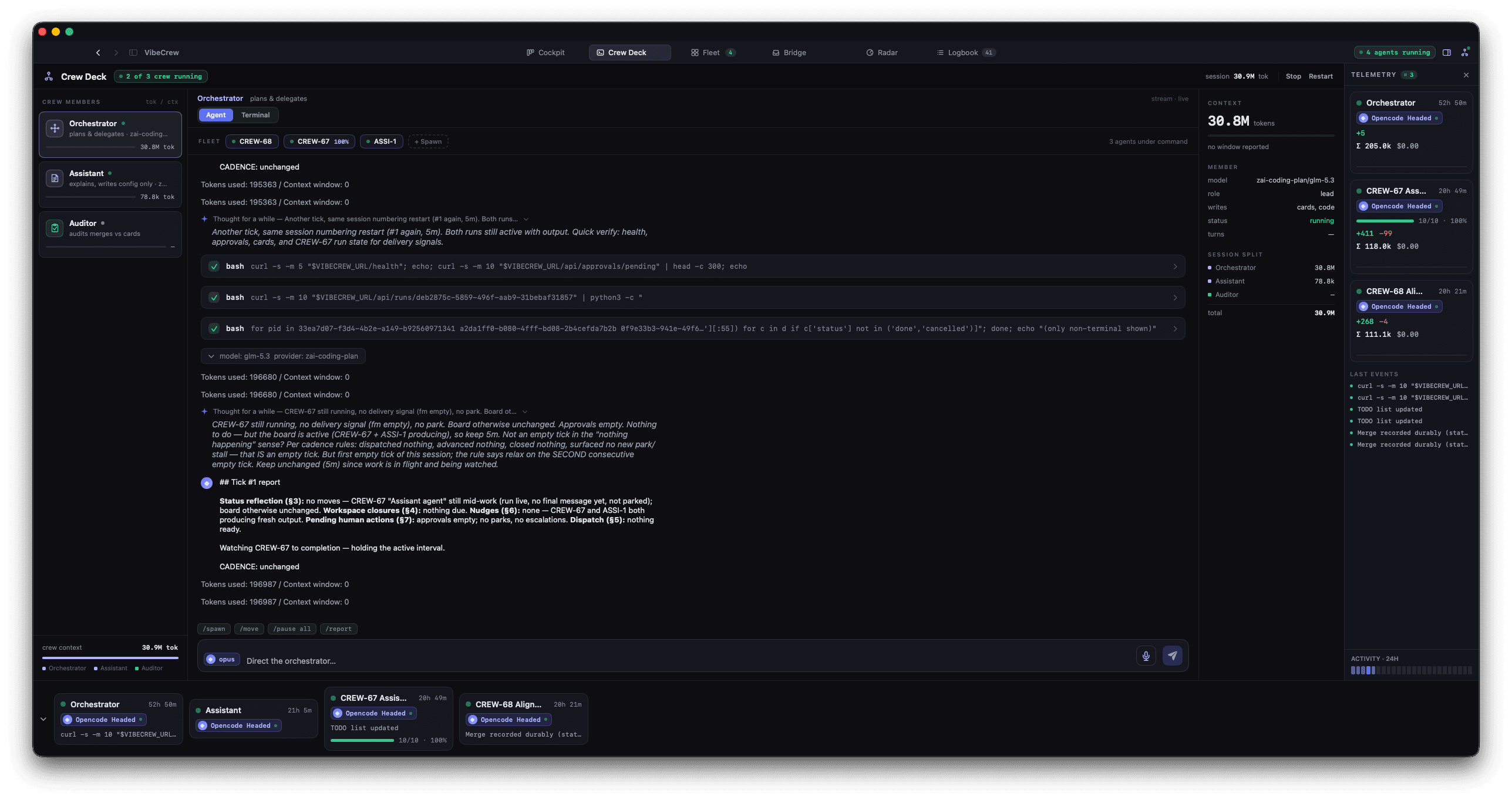
CREW-68, CREW-67, ASSI-1 — and a + Spawn button for the next one. The Orchestrator holds the fleet so you don't have to hold it in your head.
It ends every tick by telling the app how soon to wake it again. Busy board, five minutes. Quiet board, thirty. The timer belongs to the app, so it survives quitting.
Slash commands for the evenings when you'd rather not phrase a sentence.
Drop into any agent, mid-thought, without breaking its stride.
Every running agent with its tokens and its diff. Click one and you are inside its workspace — Agent, Terminal, Logs, Changes, Preview, Files, Git, Telemetry. The Terminal tab is not a log tail. It is the agent's real TUI in a live tmux session: you can read it, and you can type into it, and it keeps going when you close the window.
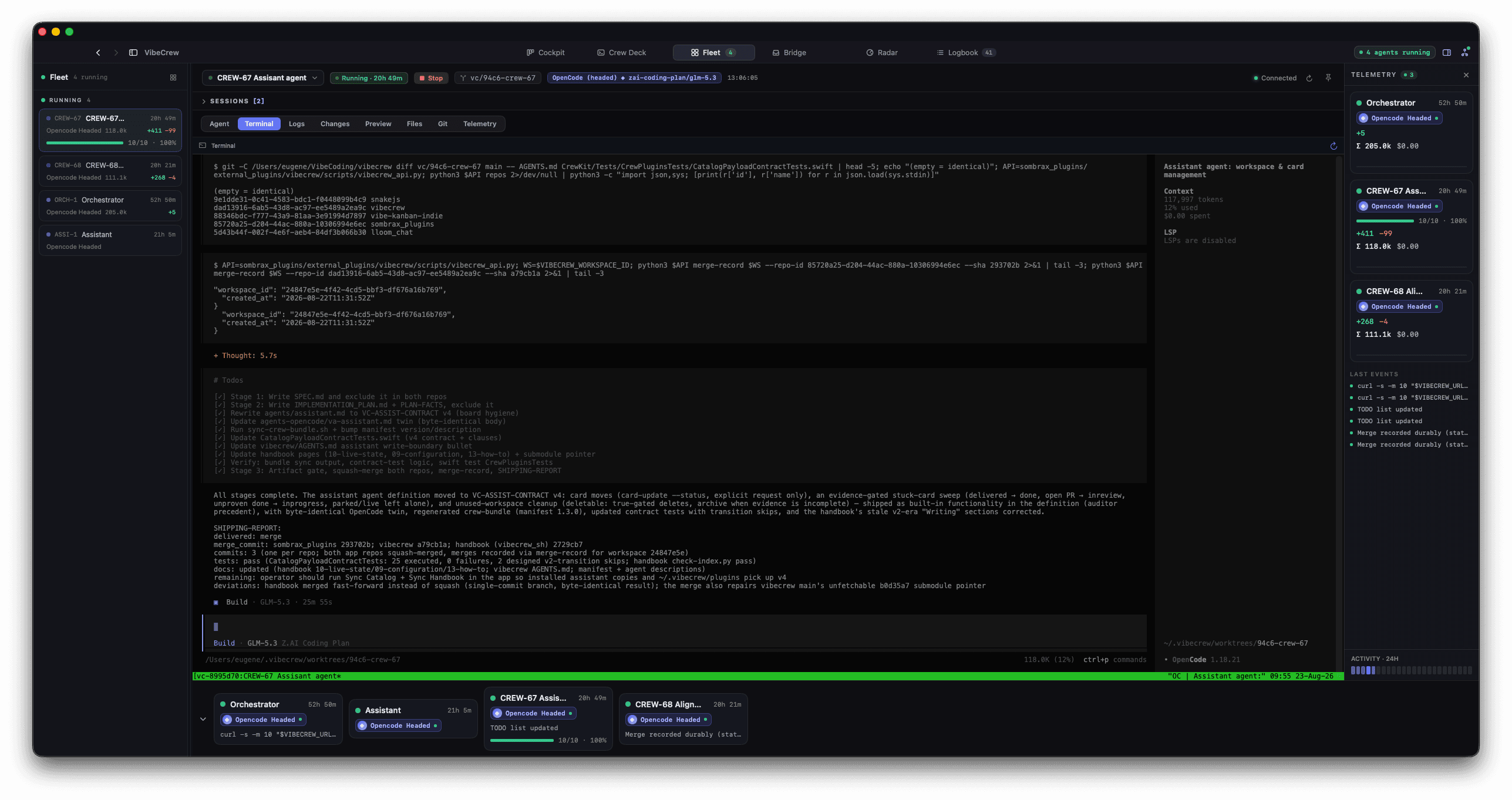
Harness and model, chosen per card. Claude Code, Codex, OpenCode, Pi — frontier or open-weight. The pipeline is what makes a card land, not the model.
delivered: merge · 3 commits · tests: pass — and a deviations line, because it tells you when it went off-plan instead of hoping you don't check.
One glance at what a run is costing you, in context and in money, while it is still spending it.
The only screen in the app allowed to interrupt you.
Approvals, questions, failed runs, review-ready diffs — every project, one list. Flip it to Needs you and everything that merely happened disappears. When nothing is left it says so, in words: All caught up. And if you're not at the laptop, the same question reaches your phone through your own Telegram bot, with no relay of ours in the middle.
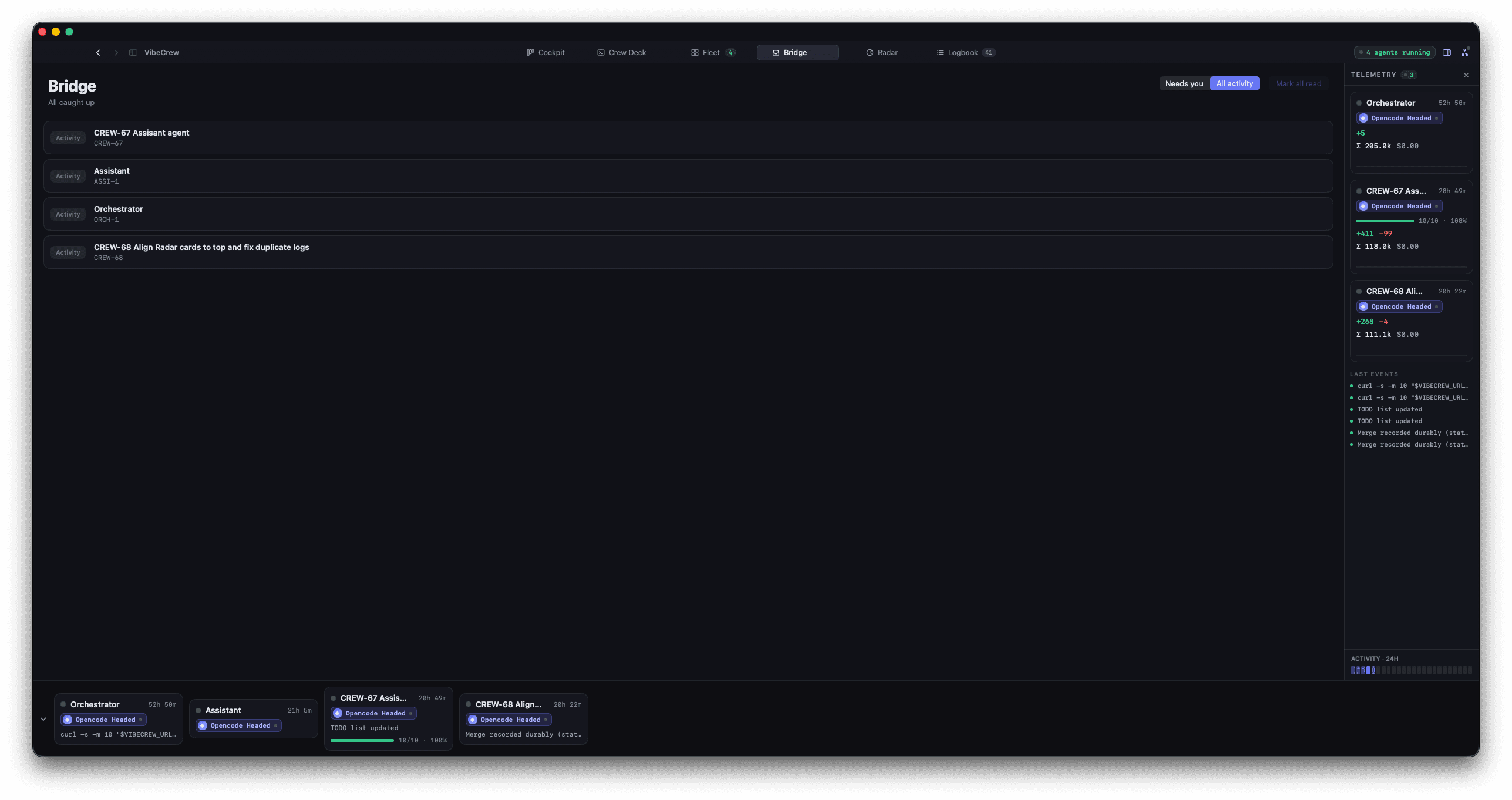
One toggle between what happened and what is actually blocked on a human being.
An agent that asked a question stops until it's answered. Clearing this list is literally clearing the runway.
Nobody watching? It goes to Telegram — your bot, your chat, your machine on the other end.
Peripheral vision for four agents at once.
Put Radar on the second monitor and then forget about it. Each tile is one live agent: its last few lines of output, its stage progress, and a quiet timer counting how long since it last said anything. You will notice a tile going quiet without ever deciding to look at it — which is exactly how much attention this deserves.
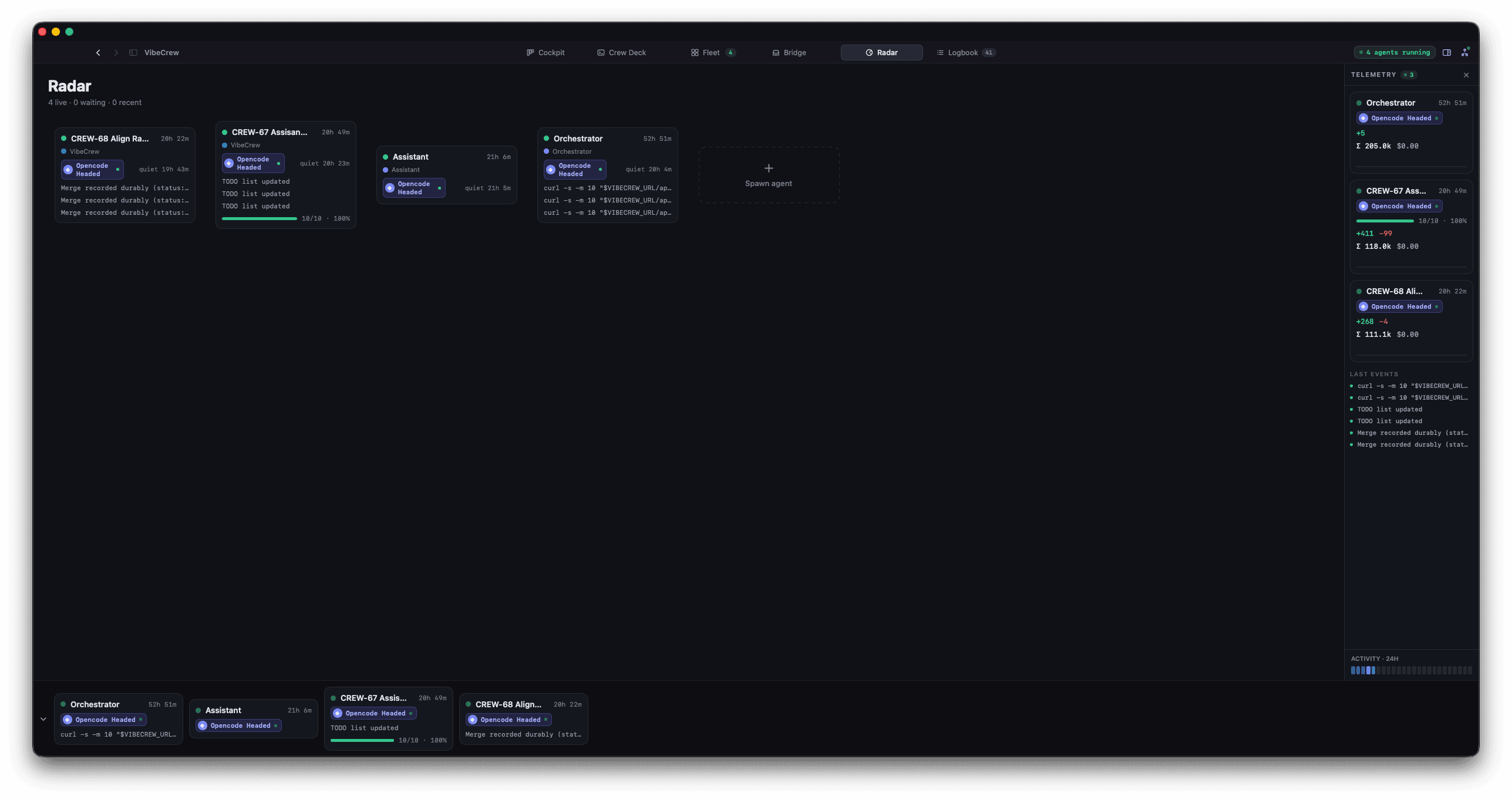
Quiet is not stalled. Headed agents idle between turns, and the timer is how you tell the difference at a distance.
Stage progress per agent, with no clicking, no drilling in, no tab you have to remember to open.
The dashed tile is an invitation. One more agent, started from the same screen you were idly watching.
Everything it did while you were asleep, timestamped and in plain words.
348 events, newest first. Run killed, executor OPENCODE_HEADED. Orchestrator tick #3 delivered — next in 30m, cadence agent, 5 fleet runs. Voice output fell back to system speech because the local model wasn't warm, so it warmed it in the background and said so. This is the answer to “why did it do that at 3am”, already written down before you asked.
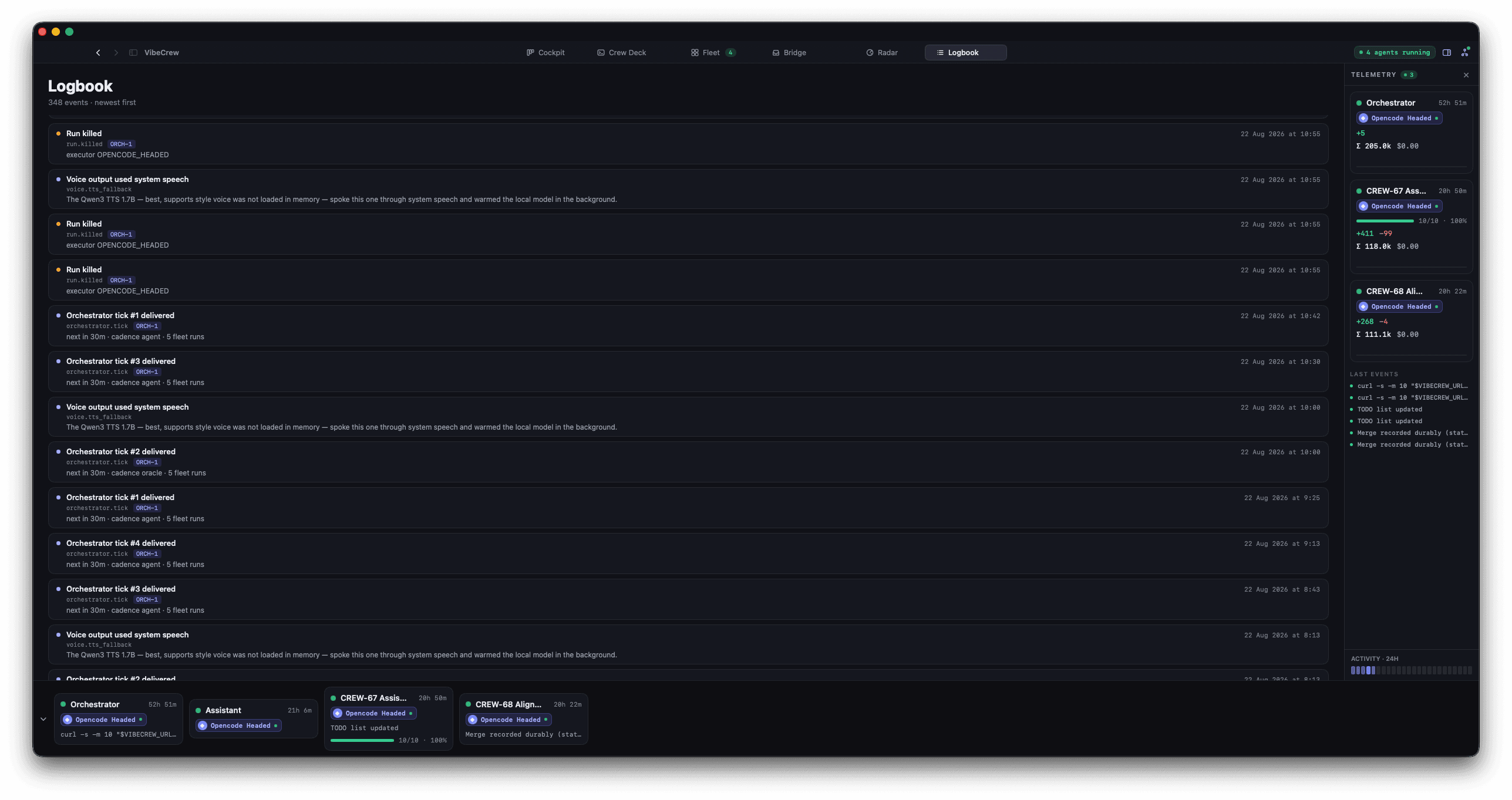
Typed, structured events with an actor and a time — not a console dump you have to grep at breakfast.
Every wake-up recorded, with the cadence it chose and the fleet size it saw when it chose it.
Even the graceful degradations explain themselves. An app that hides its fallbacks is an app you end up debugging.
None of it needs you. All of it lets you in.
You write the cards. The board cuts a worktree, starts an agent, runs the pipeline, reviews the diff, and ships. The only thing that reaches you is the one thing that actually needed a person — and every screen here exists so that when it does reach you, you already know what happened.